

78th Anniversary of Independent India’s First Olympic Gold.

Share
August is a milestone month in the story of Indian hockey. Many of India’s Olympic gold medals were won in this month, making it a time of special significance for the sport. And today carries an even deeper resonance. Seventy-eight years ago, on this very day, India won an Olympic gold that helped define the future course of Indian hockey—one that remained golden for several more decades.
As the World Cup is set to unfold in just two days, Indian hockey inevitably turns nostalgic, looking back at those defining moments of glory—the London Olympic triumph and, of course, the historic 1975 World Cup victory, achieved 51 years ago in March.
These are not merely dates in the history of Indian hockey. They are milestones that shaped its identity, inspired generations and continue to live in the collective memory of the sport.
THE 1948 STORY
“Indeed, to my mind if a special souvenir was to be awarded to any one player, who contributed most to Indian’s victory, I would unhesitatingly give the palm to our squat, smiling-faced Leo. His display in the semifinal against Holland should forever niche for Pinto a plaque to himself in the hockey hall of fame”.
The above words were not from any run of the mill writer. A player of the 1948 Indian Olympic hockey team, who got injured mid way through the hockey event, wrote even before landing home country. (Locating of his writings is the best finding in this writer’s career).
He was professionally a journalist, and wrote reams about 1948 Olympics. Since he himself played a match, and part of the team, his words should count.

Leo Pinto, the greatest goaie
His appreciation was not without merit. India was almost pushed to corner in the last moments of the semifinal. India 2 Holland 1 with just six minutes left in the clock. Holland has got six penalty corners in that spell, defenders RS Gentle and Trilochan Singh having very rough to contain the ‘direct hockey’ of the Dutch. It was Leo, born in Africa, brought up in Bombay, who missed the 1936 Olympics due to injury, who stood between Dutch goal and India. While Pakistan caved in in such situation against Britain in the other semis, Leo did not allow such a disaster for India.
Leo incidentally was the senior most in the team. He died when he was 96.
Britain got a penalty bully (equivalent of penalty stroke) mid way in the final, it was left to Leo to tackle in the resultant one-to-one duel against the Britain captain. Lion-hearted Leo discarded his pads for a while, faced it, and saved too. Otherwise, the score would have been 2-1, and had been so, who knows what course the match would have taken, how we would have secured the unblemished 4-0 score which now is the final historic label.
Next comes second senior most in the team Kishen Lal, the unanimous choice of captain. 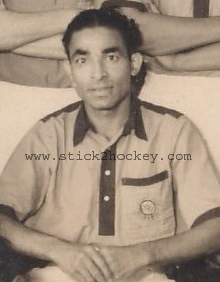 The speedy forward was one of the six players in the team to play all the Five Matches, which meant the kind of fitness they had had. India was struggling against Spain in the league and against Dutch in the semifinals. It was left to the second senior most in the team Kishen to lift the sagging morale of his team with a move or two on the field that would even surprise him, and energize the team which is in loathe. Every match report published in those times give full credit to him for such specs of spectacular moves that silenced the rivals, leading to Indian fame.
In today’s parlance he is prototype of SV Sunil, tireless cross manufacturer. Of course crosses are forgotten goals that came out of another’a adept is.
Third in the row is Keshav Dutt. He was affected by Partition, stranded in Mumbai. His family wrote to him not to return, as the city is in flames, they themselves were out to leave Lahore. Keshav found a stay in Mumbai, cajoled everyone to take him into Bombay side for the Selection National, and the rest is history. He is in modern day parlance equated to Manpreet Singh. He played all the six matches, where he excelled.
Then you have KD Singh Babu, who is ambitious, self-conscious, emotional cauldron, aristocratic life style, but gem of a player, team man, who will part balls selflessly in the circle in order to see team wins.
There was then Pat Jansen, whom you may compare to Baljit Singh Dhillon. Then you have the awe-evoking Penalty Corner expert lanky Trilochan Singh Bawa.
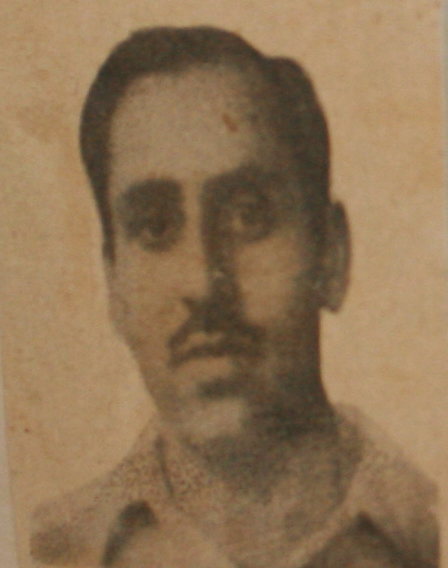 He played for Faridkot team, and had the company of legendary Udham Singh (four times Olympian). Impeccable interceptor of ball, game accelerator par excellence when team is down, his role had been vital in every game. He is much like present day Rupinder Pal Singh.
The most important cog in the wheel, that smashed the British Pride once for all, was Amir Kumar, the fulcrum around which the entire team would move– the centre-half.
He can truly be equated to present day Sardar Singh. As a true team man, he played as per the game plan, never worked for himself, never gave interviews in his entire career. It does’t mean the former Dockyard player, later Dunlop player, played less role.
So much so, he was selected for his second Olympics in 1956, despite missing 1952 number. When India was leading 1-0 in the 1956 final, it was Amir who saved a penalty bully, and thus saw to it Indian score doesn’t become 1-1.
When the nation rejoices the 1948 Olympic Gold these heroes, their relatives and promoters too deserve all adulation.
Are we doing it?
ARE WE FAIR TO THOSE DEPARTED SOULS?
948 London Olympics: Kishan Lal (Capt.), K.D. Singh Babu (Vice-Capatain), Leo Pinto, Ranganathan Francis, Trilochan Singh, Akhtar Hussain, Walter D’Souza, Randhir Singh Gentle, Keshav Chander Dutt, Maxie Vaz, Jaswant Singh Rajput, Leslie Claudius, Amir Kumar, Lawrie Fernandes, Latif-ur- Rahman, Patttrick Jansen, Reginald Rodrigues, Gerry Glacken, Balbir Singh Dosanj, Grahanandan Singh.
Pankaj Gupta (Manager), Dr. AC Chatterjee (Manager), Habul Mukherjee (Coach), R. Carr (Coach)
Picture caption
Top most: Leo Pinto in his late 80s at home in Bandra (Mumbai)
Second from top: Kishen Lal
Third from top: Keshav Dutt (inset his young age)
Bottom: Amir Kumar
www.stick2hockey.com is India’s oldest hockey website. Launched in 1999, the website, edited and owned by hockey historian and author K. ARUMUGAM, has covered all
major tournaments and events with precision. www.stick2hockey.com is the first site in the hockey world to bring viewers live text commentary and duly entered the prestigious Limca Book of Records. If vintage stories are what you are looking for, this site is the right one for you. You will also find pictures, some of them among the rarest, images of precious newspaper clippings, match reports, news breaks, interviews, features, statistics and history on a site respected by one and all in the hockey world.
1 Comment
Leave a Comment


The latest & greatest news, reviews, scores and players from Field Hockey,

hare krishna . wow we ‘repeat again” 1975 world cup victory, 2026 .jai hind